All Reports
-
Participatory Design in Academic Libraries: New Reports and Findings
2014-02-01 — Report
// TODO: strip HTML and put this in the header
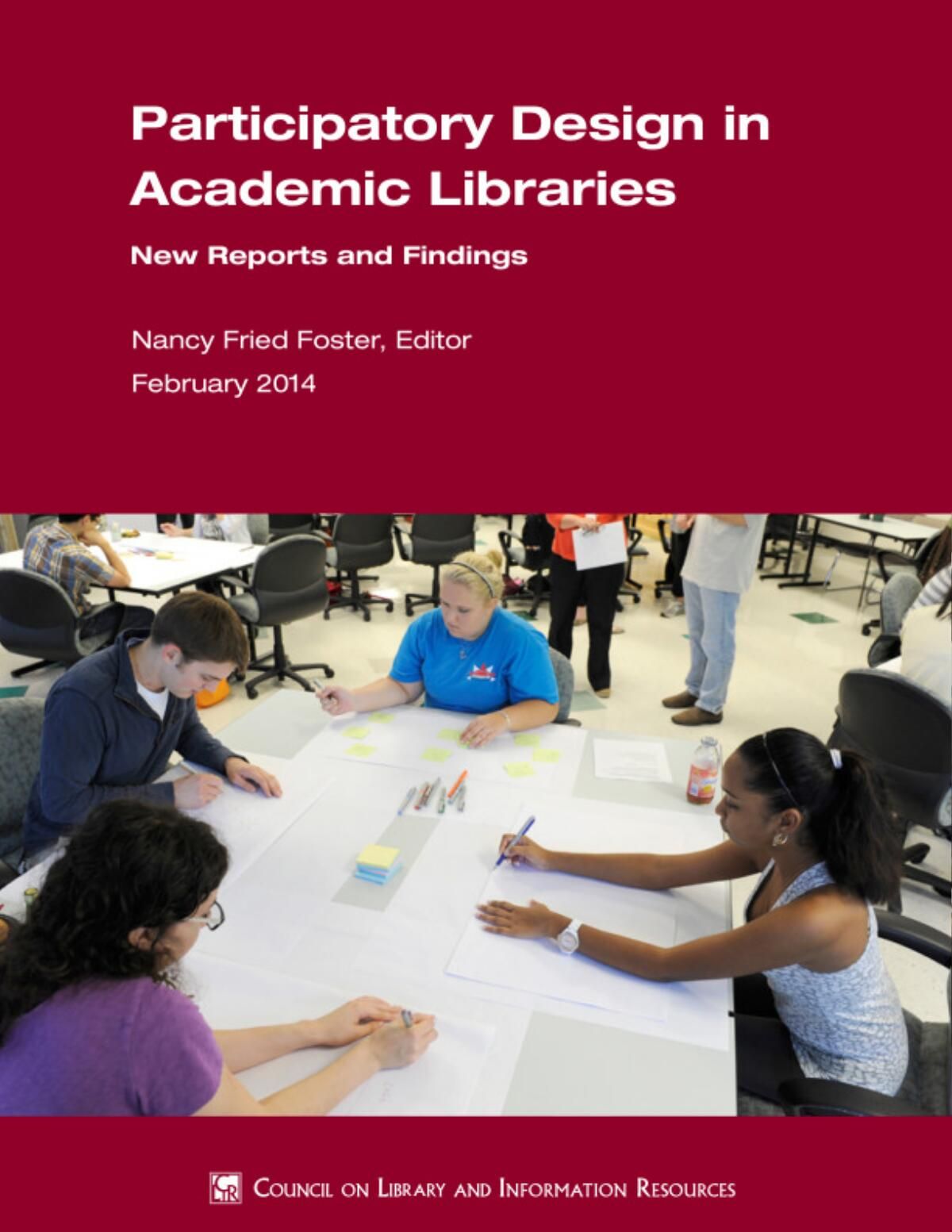
This report looks at how staff at eight academic institutions gained new insight about how students and faculty use their libraries, and how the staff are using these findings to improve library technologies, space, and services.
Participatory design is a relatively recent approach to understanding library user behavior. It is based on techniques used in anthropological and ethnographic observation. The report’s editor, anthropologist Nancy Fried Foster, led several participatory design workshops for CLIR from 2007 to 2013.
The report is based on a series of presentations at the second CLIR Seminar on Participatory Design of Academic Libraries, held at the University of Rochester’s River Campus June 5-7, 2013. Chapters focus on projects at the University of Colorado, Boulder; Colby College; University of Connecticut; Columbia University; Rush University Medical Center; Purdue University; Northwestern University; and the University of Rochester. David Lindahl, of the University of Missouri-Kansas City, provided the keynote. It is the second of two volumes published by CLIR that focus on participatory design. The first, Participatory Design in Academic Libraries: Methods, Findings, and Implementations, was published in October 2012.
-
The Survival of American Silent Feature Films: 1912–1929
2013-09-01 — Report
// TODO: strip HTML and put this in the header
Commissioned for and sponsored by the National Film Preservation Board, Library of Congress.
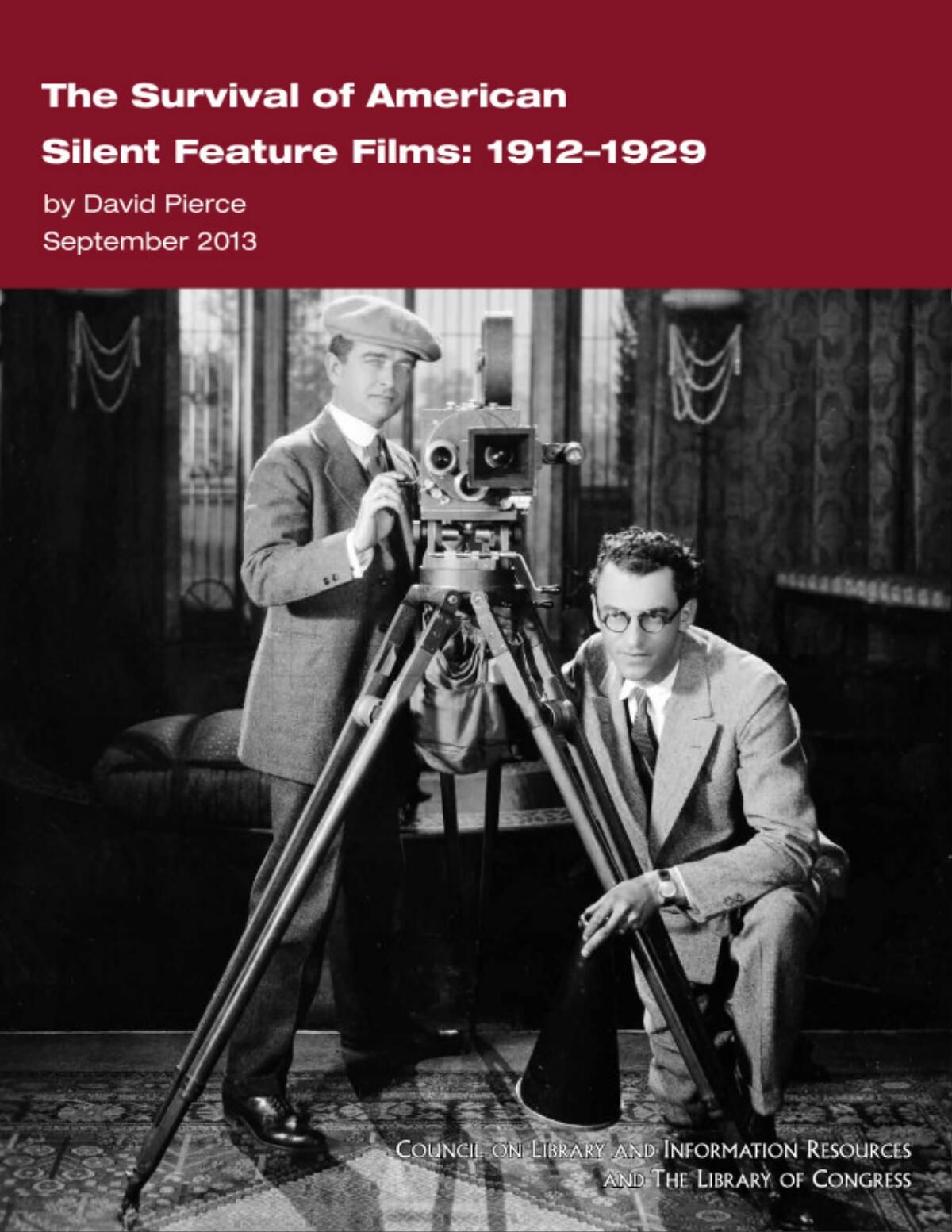
The era of the American silent feature film lasted from 1912 until 1929. During that time, filmmakers established the language of cinema, and the motion pictures they created reached a height of artistic sophistication. These films, with their recognizable stars and high production values, spread American culture around the world. Silent feature films disappeared from sight soon after the coming of sound, and many vanished from existence.
This report focuses on those titles that have managed to survive to the present day and represents the first comprehensive survey of the survival of American silent feature films. Mr. Pierce’s findings tell us that only 14% of the feature films produced in the United States during the period 1912–1929 survive in the format in which they were originally produced and distributed, i.e., as complete works on 35mm film. Another 11% survive in full-length foreign versions or on film formats of lesser image quality such as 16mm and other smaller gauge formats.
Mr. Pierce has also created a valuable database of location information on the archival film holdings identified in the course of his research. See www.loc.gov/film.
-
Image Retrieval Benchmark Database Service: A Needs Assessment and Preliminary Development Plan
2003-10-01 — Report
// TODO: strip HTML and put this in the header
A report on the feasibility of creating an image retrieval benchmarking service.
-
A Survey of Digital Cultural Heritage Initiatives and Their Sustainability Concerns
2003-06-02 — Report
// TODO: strip HTML and put this in the header
In 2002, CLIR commissioned a survey of North American-based digital cultural heritage initiatives (DCHIs). The purpose of the survey was to identify the scope, financing, organizational structure, and sustainability of DCHIs. To gain a funder’s perspective on these initiatives, the survey also included a few public and private funding organizations that support projects with a digital cultural heritage component. The survey was a preliminary step in a larger effort aimed at developing recommendations for a coordinated strategy to sustain and strengthen digital cultural heritage initiatives and their by-products.
Survey results and recommendations are in this report.
-
Dimension and Use of the Scholarly Information Environment
2001-07-01 — Report
// TODO: strip HTML and put this in the header
The backdrop for this study is that the Digital Library Federation (DLF) has become increasingly concerned by the absence of reliable information with which to document and explain changing patterns of library use in universities and colleges. DLF repeatedly hears from academic library directors that such analyses are vital but missing ingredients of their strategic planning, and of the business case they make to faculty and senior administrators either to win or bolster support for the library and its changing directions.
-
Preservation Priorities in Latin America: A Report from the Sixtieth IFLA Meeting, Havana, Cuba
1995-07-03 — Report
// TODO: strip HTML and put this in the header
The information in this report is condensed from the presentations and conversations, both formal and informal, that occurred during the 60th meeting of the International Federation of Library Associations (IFLA). About 1,500 librarians attended, representing Cuba, Venezuela, Mexico, Argentina, Peru, and Colombia. Training for preservation administrators and preservation technicians was identified as a high priority need in Latin America. Because of the need for training, Latin American librarians were eager for current preservation literature. Maintenance and storage environments were also priority concerns; however, the breakdown of acidic papers was scarcely mentioned. Biological pests are perceived as a greater hazard in tropical environments. Of secondary priority, the conference participants recognized reformatting and bibliographic control, connectivity through new technologies, and opportunities for creative projects.
-
1992-1993 Annual Report
1992-07-01 — Report
// TODO: strip HTML and put this in the header Annual for The Commission on Preservation & Access
-
36th Annual Report
1992-07-01 — Report
// TODO: strip HTML and put this in the header The 36th Annual Report for the Council on Library Resources
-
ANNUAL REPORT TO FOUNDATIONS: July 1, 1980 - June 30, 1981
1981-07-01 — Report
// TODO: strip HTML and put this in the header
Annual report to Foundations for period July 1, 1980 - June 30, 1981