All Reports
-
An Overview of Emulation as a Preservation Method
2025-07-16 — Report
// TODO: strip HTML and put this in the header
Emulation–the use of modern computer systems to run historical software–is a growing practice within libraries, archives, museums, and galleries that is essential to conserving and providing ongoing access to the digital past. Emulation makes it possible to interact with historical data and digital artifacts in ways that are more consistent with their creators’ intentions, helping contemporary users better understand how and why those artifacts were made. Increasingly, academic and cultural organizations face challenging decisions about using emulation to preserve and provide access to their collections. An Overview of Emulation as a Preservation Method introduces fundamental concepts related to emulation in practice and explains key considerations that can inform these decisions. The report also includes a review of academic literature related to emulation and suggests new avenues for potential future collaboration and exploration. Together, the conceptual overview, example use cases, and literature review provide readers new to emulation with an orientation to the current state of practice as well as an understanding of the important role of emulation in the larger field of digital preservation.
The six authors of the report are members of the Software Preservation Network (SPN) Technological Infrastructure Working Group. Over several years, this group has been documenting and sharing insights about emulation workflows actively employed in academic and cultural settings. Their work aims to establish best practices and inform scalable infrastructure solutions that can be broadly shared so that legacy software can become more accessible and maintainable in the future.
-
Annual Report: 2023-2024
2025-02-13 — Report
// TODO: strip HTML and put this in the header
Annual Report for the Council on Library and Information Resources, 2023-2024
-
Archivist Actions, Abolitionist Futures: Reimagining Archival Practice Against Incarceration
2025-01-09 — Report
// TODO: strip HTML and put this in the header
This collection of brief essays challenges long-held principles of archival practice by addressing the carceral underpinnings of the cultural professions. Contributors explore how complicity with carceral systems and the Prison Industrial Complex undermines equitable access to information and perpetuates systemic harms. Drawing from their experiences working with collections documenting the lives and creativity of incarcerated individuals, the authors reflect on how traditional archival methods often fall short of providing respectful access to these materials. The volume offers a call to action for reimagining archival work grounded in abolitionist values.
-
Creating Ethical Temporary Positions in Archives: Best Practices and Case Studies
2024-12-17 — Report
// TODO: strip HTML and put this in the header
Creating Ethical Temporary Positions in Archives reflects on the “hidden collections” era and the impact of the resulting proliferation in grant-funded temporary positions on the employment of archivists. The authors examine why and how cultural organizations have come to rely so heavily on contingent positions to perform core operational work. Grounded in research including a literature review, survey findings, and case studies, their report offers guidelines on how to most ethically design, hire, and administer term-limited archival positions. The report builds upon the authors' previous efforts to establish the Best Practices for Archival Term Positions, which was first published in 2022 and ratified by the Society for American Archivists in 2023.
-
Inclusive Metadata Toolkit
2024-10-22 — Report
// TODO: strip HTML and put this in the header
Created by the inclusive metadata task force of the DLF Cultural Assessment Working Group (CAWG), the Inclusive Metadata Toolkit serves as a centralized guide to the range of inclusive metadata tools and resources currently out there, in order to equip practitioners to implement inclusive metadata practices in their day-to-day work.
The toolkit consists of two components:
- The Inclusive Metadata Toolkit guide document, which provides context for the listed tools and resources in order to make them easier to use and navigate. This document is static.
- The complete Inclusive Metadata Toolkit Resource Directory, which serves as a sortable and filterable directory of inclusive metadata tools and resources to help you wherever your institution is at. The version in OSF is a static snapshot of a living document.
We hope the Inclusive Metadata Toolkit Resource Directory can continue to change and grow, providing a living directory as more inclusive metadata tools and resources are created and published over time. Additional resources can be suggested through the Inclusive Metadata Toolkit Suggested Resource & Feedback Form. General feedback or questions are also welcome.
-
The Story of the Modern Seed Library: A Historical Analysis of Seed Saving, Its Evolution Through the Ages, and Its Current Impact on Community, Culture, and Connection
2024-09-04 — Report
// TODO: strip HTML and put this in the header
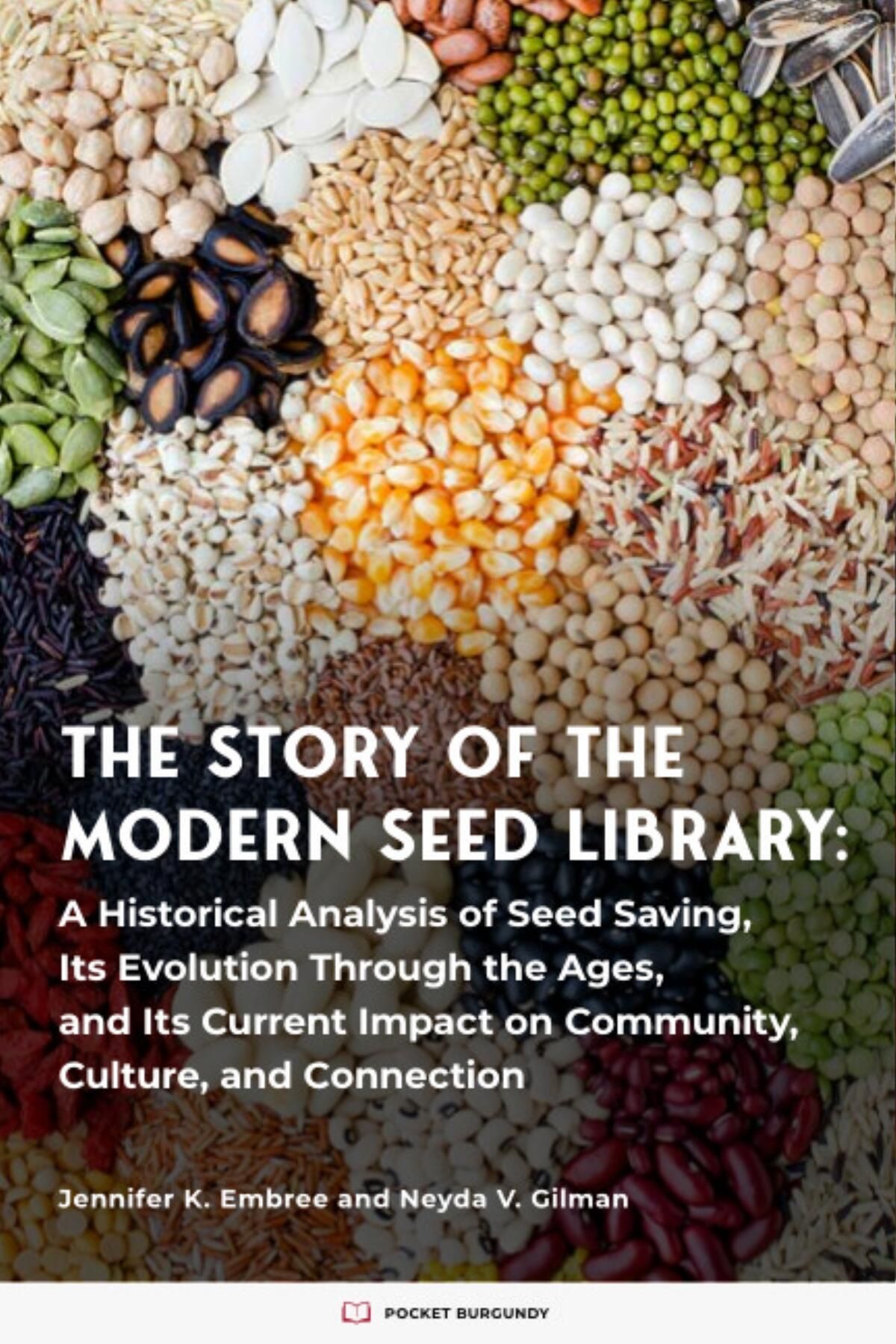
This study explores the relationship between humans and seeds, from the first agricultural societies 12,000 years ago to the modern era of centralized agribusiness corporations. Authors Jennifer K. Embree and Neyda V. Gilman argue that seeds, like any resource, have been a tool for human power, control, and development. As genetic biodiversity in plant life collapses due to climate change, Embree and Gilman offer seed libraries as a community-centered service that libraries can provide to combat food insecurity while celebrating biodiversity. Both faculty-ranked academic librarians at Binghamton University, the authors were inspired to write this publication as they worked together to launch their library’s Sustainability Hub in 2021, which includes the campus’s first seed library.
-
Profiles in Data and Software Curation
2024-04-15 — Report
// TODO: strip HTML and put this in the header
This four-part series highlights the careers and achievements of former CLIR data and software curation fellows. In 2022, Inna Kouper—a 2012-2014 CLIR data curation fellow herself—interviewed eleven former data and software curation fellows who received fellowships between the years 2015 and 2018. The work of these and 40 more fellows was made possible with the generous support of the Alfred P. Sloan Foundation. Dr. Kouper talked to each about their fellowship experiences, their careers, and the challenges of data and software curation, preparing profiles that capture the breadth and diversity of their work while summarizing their perspectives on current practice.
-
Information resources: Has the digital revolution made the world of global academic research bigger or smaller? RILM: A case study in the field of music
2022-05-24 — Presentation
// TODO: strip HTML and put this in the header
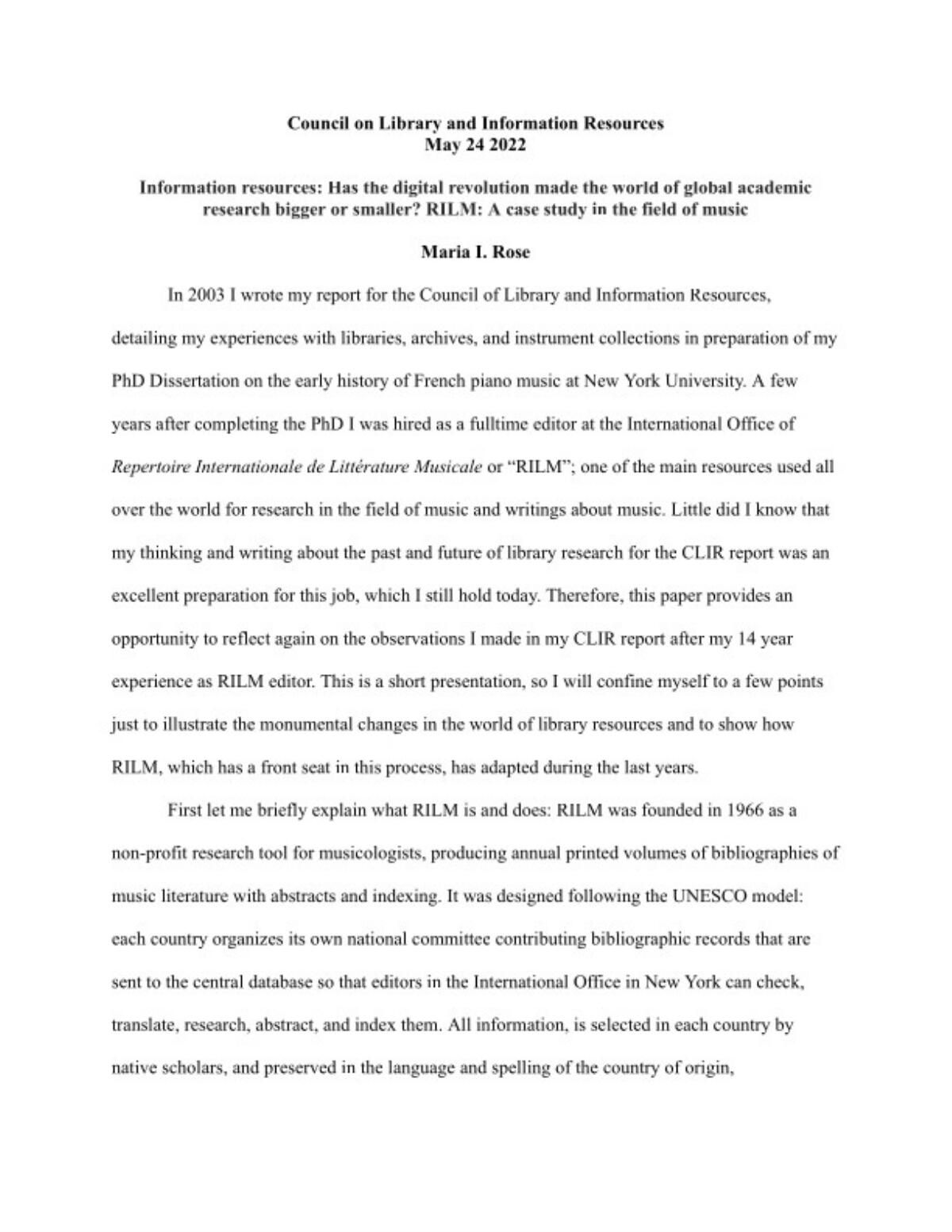
My 2003 CLIR report addressed the questions that the digital revolution raises at a time when use of the Internet was surging. My subsequent work as an editor of RILM (Répertoire Internationale de Littérature Musicale), a global online music bibliography that covers all fields of music, has been a journey through the far-reaching changes that globalization and digitalization have imposed on academic research in the last twenty years. RILM was conceived in 1966 as a global research tool modeled after the UNESCO idea, and its wide scope was ahead of its time. How has this model fared in the era of digital globalization?
-
Panel and open discussion: New Archival Approaches to the History and Memory of Atlantic World Slavery
2022-05-24 — Presentation
// TODO: strip HTML and put this in the header
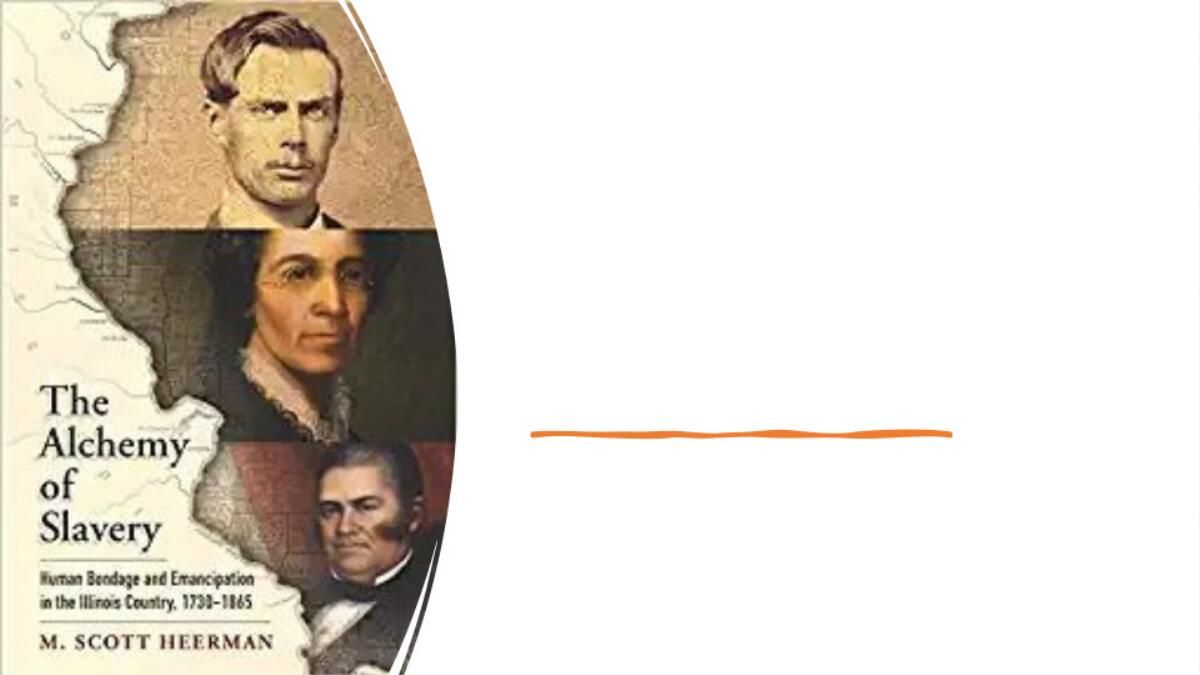
With a focus on the history and memory of Atlantic world slavery, this virtual roundtable explores new approaches to the archive. Panelists will talk about the research that went into their books. Dr. Danielle Terrazas Williams will discuss The Capital of Free Women: Race, Legitimacy, and Liberty in Colonial Mexico (Yale, 2022). Dr. Scott Heerman will talk about The Alchemy of Slavery: Human Bondage and Emancipation in the Illinois Country (Penn, 2018). Dr. Matthew Fox-Amato will discuss Exposing Slavery: Photography, Human Bondage, and the Birth of Modern Visual Politics in America (OUP, 2019).
-
Teaching Physical Archival Research in the Digital Age
2022-05-24 — Presentation
// TODO: strip HTML and put this in the header
Over the past five years I have had the opportunity to advise dozens of short archival research projects using the collection of the Musiksammlung at the Österreichische Nationalbibliothek in Vienna, Austria, the primary archive where I completed my CLIR Mellon Fellowship. Despite the prevalence of freely available digital archival materials, when confronted with original sources such as manuscripts in a well-known composer’s hand, medieval sacred chant books, or annotations filling the margins of étude books, students have expressed excitement and engagement that goes far beyond anything that occurs in a traditional classroom, or while examining digital documents.
In this essay I offer some suggestions on working with college students on archival projects, as well as speculations on the benefits of encouraging active use of physical archives by modern students. Students who live vast portions of their lives online can benefit as much as, if not more than, earlier generations by studying physical archival documents. Encounters with original sources can increase comprehension, excitement, and creativity for students longing for educational experiences that create a feeling of authenticity.